 Alex Goodman
39c9c690df
Alex Goodman
39c9c690df
* chore(deps): pin stereoscope to the hardlink-inode-adoption branch

temporary pin to anchore/stereoscope#670 so the hardlink changes can be
exercised end to end. needs re-pinning to a release tag before merge.

pulls transitive bumps along with it: docker/cli, docker/go-connections and
gabriel-vasile/mimetype.

Signed-off-by: Alex Goodman <wagoodman@users.noreply.github.com>

* fix: drop the image resolver hardlink workaround

stereoscope now adopts a hardlink's target at index time, so a hardlinked name
arrives already described as a regular file with the target's size, mime type
and content. the resolver-side fix from #5029 sat on top of that doing the same
job a second time, gated on a file type that no longer shows up, so both
`resolveHardLinkTarget` implementations and the extra tree walk they cost on
every `FilesByPath` are gone.

`file.NewVirtualLocationFromImage` stays as-is. it is exported and syft is v1,
so it keeps working for anyone using it, it just has no callers in syft now.

this picks up `FilesByMIMEType`, which #5029 explicitly could not fix, so
hardlinked names now reach mime-driven catalogers. on images built around
multi-call binaries (busybox and friends) that is a lot more file and executable
entries than before; distro and toolchain images move by about one entry.

one shape regresses: a hardlink stereoscope could not adopt (a link name that is
absent, empty, names a directory, names another un-adopted link, or points into
a lower layer) keeps `TypeHardLink`, and syft goes back to collapsing it onto
its target's path. no mainstream builder emits the cross-layer case.

Signed-off-by: Alex Goodman <wagoodman@users.noreply.github.com>

* bump stereoscope to main

Signed-off-by: Alex Goodman <wagoodman@users.noreply.github.com>

---------

Signed-off-by: Alex Goodman <wagoodman@users.noreply.github.com>

Syft
A CLI tool and Go library for generating a Software Bill of Materials (SBOM) from container images and filesystems. Exceptional for vulnerability detection when used with a scanner like Grype.






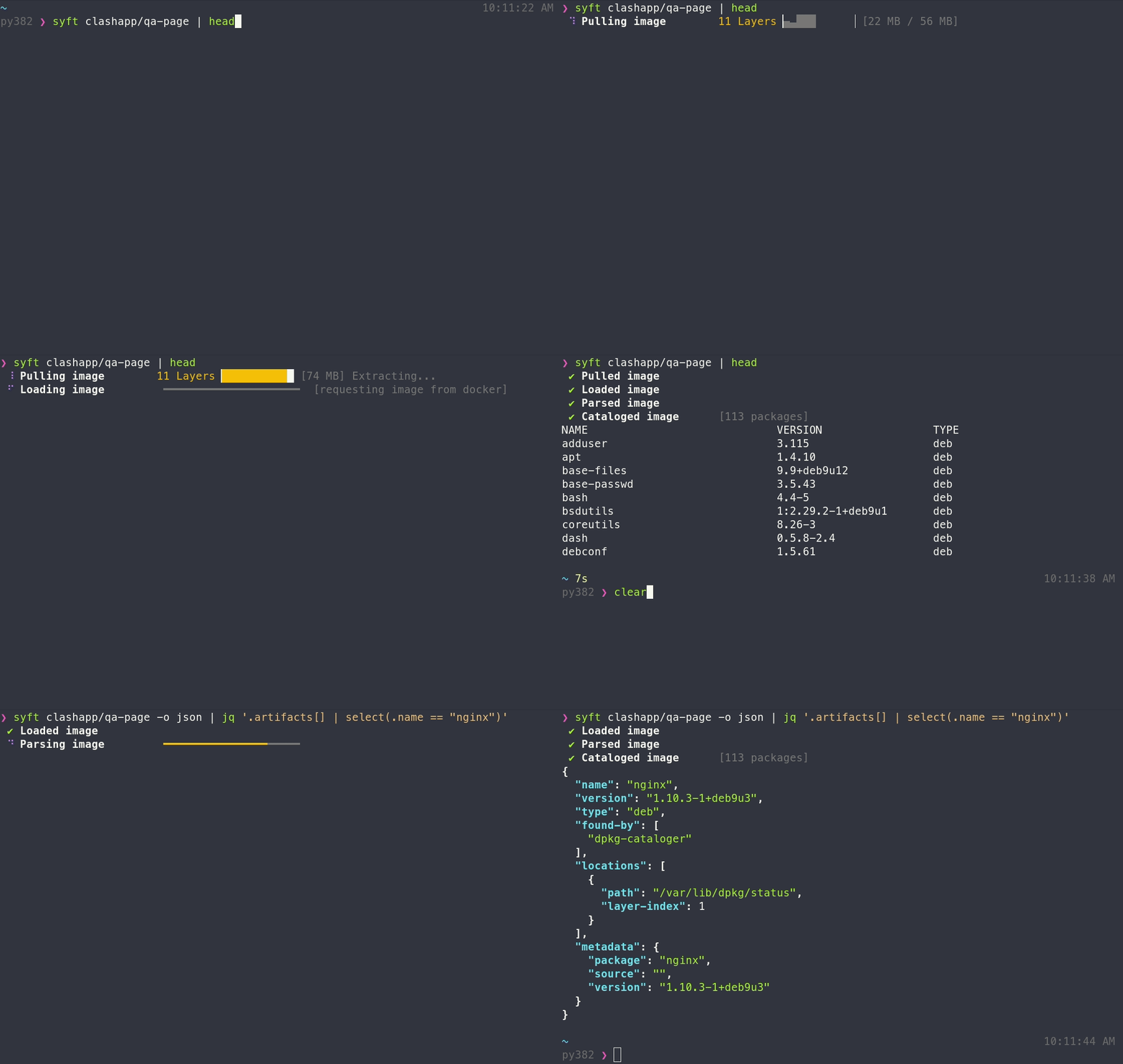
Features
- Generates SBOMs for container images, filesystems, archives (see the docs for a full list of supported scan targets)
- Supports dozens of packaging ecosystems (e.g. Alpine (apk), Debian (dpkg), RPM, Go, Python, Java, JavaScript, Ruby, Rust, PHP, .NET, and many more)
- Supports OCI, Docker, Singularity, and more image formats
- Works seamlessly with Grype for vulnerability scanning
- Multiple output formats (CycloneDX, SPDX, Syft JSON, and more) including the ability to convert between SBOM formats
- Create signed SBOM attestations using the in-toto specification
Tip
New to Syft? Check out the Getting Started guide for a walkthrough!
Installation
The quickest way to get up and going:
curl -sSfL https://get.anchore.io/syft | sudo sh -s -- -b /usr/local/bin
Tip
See Installation docs for more ways to get Syft, including Homebrew, Docker, Scoop, Chocolatey, Nix, and more!
The basics
See the packages within a container image or directory:
# container image
syft alpine:latest

# directory
syft ./my-project
To get an SBOM, specify one or more output formats:
# SBOM to stdout
syft <image> -o cyclonedx-json

# Multiple SBOMs to files
syft <image> -o spdx-json=./spdx.json -o cyclonedx-json=./cdx.json
Tip
Check out the Getting Started guide to explore all of the capabilities and features.
Want to know all of the ins-and-outs of Syft? Check out the CLI docs, configuration docs, and JSON schema.
Contributing
We encourage users to help make these tools better by submitting issues when you find a bug or want a new feature. Check out our contributing overview and developer-specific documentation if you are interested in providing code contributions.
Syft development is sponsored by Anchore, and is released under the Apache-2.0 License.
The Syft logo by Anchore is licensed under CC BY 4.0


For commercial support options with Syft or Grype, please contact Anchore.
Come talk to us!
The Syft Team holds regular community meetings online. All are welcome to join to bring topics for discussion.
- Check the calendar for the next meeting date.
- Add items to the agenda (join this group for write access to the agenda)
- See you there!